
Delhi Rent Control Act 2026: How Outdated Laws Are Crushing Landlord ROI & Rental Yields
Discover how the decades-old Delhi Rent Control Act is straining landlords in 2026. Learn how these outdated laws severely limit rental yields and property ROI.
The Fortune Realty Group
3/24/20264 min read
Delhi Rent Control Act 2026: How Outdated Laws Are Crushing Landlord ROI & Rental Yields
Discover how the decades-old Delhi Rent Control Act is straining landlords in 2026. Learn how these outdated laws severely limit rental yields and property ROI.
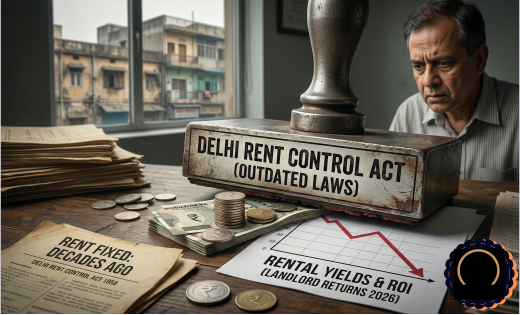
While property prices and living costs in the National Capital have surged to record highs in 2026, a significant number of property owners are trapped in a financial time warp. Despite owning prime real estate, these landlords are receiving rental yields fixed decades ago, effectively crushing their Return on Investment (ROI).
The culprit? The Delhi Rent Control Act of 1958—an archaic law originally introduced in the aftermath of the 1947 Partition to protect refugees during a severe housing crisis. While it served a crucial social purpose at the time, this outdated legislation has morphed into a massive financial and legal burden for modern landlords. Here is a deep dive into how these laws are straining Delhi property owners today and the ongoing legal battle to modernize the rental regime.
The ₹3,500 Trap: How the 1958 Act Works
Under the current legal framework, the fate of a commercial or residential rental property in Delhi hinges on a single, outdated threshold: ₹3,500 per month.
Unregulated Properties: Properties generating rent above ₹3,500 per month fall outside the rent control regime. These are governed by general property laws, allowing landlords and tenants to freely negotiate tenancy terms and market-aligned rent increases.
Protected Tenancies: Any property with a rent below the ₹3,500 threshold remains strictly governed by the 1958 Act. In these cases, landlords face stringent, almost insurmountable limits on rent increases and tenant eviction. In many of these protected tenancies, the monthly rent ranges anywhere from a mere ₹10 to ₹3,500.
For property owners caught in this system, the financial returns are virtually non-existent. A stark example of this is seen in prime commercial hubs like Karol Bagh, where landlords of wholesale stores rented out since the late 1970s receive just over ₹3,000 a year in rent—an amount that barely covers their annual municipal property tax liabilities.
Beyond the crushed rental yields, this law has created a severe infrastructure crisis:
Building Disrepair: Because the cost of structural upgrades, repairs, and fire safety compliance far exceeds the negligible rental income, landlords find it financially impossible to maintain ageing buildings.
Safety Hazards: Consequently, many of these rent-controlled properties have fallen into severe disrepair, raising serious structural and safety concerns for the occupants and the surrounding community.
Costly Litigation: Attempts to recover possession of these properties often result in years, if not decades, of expensive and fruitless litigation before the courts.
The Financial & Structural Toll on Landlords
The frustration among landlords is compounded by the fact that legislative relief already exists—it simply hasn't been enforced. Recognizing the need to modernize Delhi's rental regime, Parliament enacted a replacement law: the Delhi Rent Act, 1995.
However, more than three decades later, this modernized law has never been brought into force because the Central government has failed to issue the required commencement notification. Had this law been implemented, a vast majority of properties would have successfully transitioned out of the restrictive old rent control system.
The Legal Limbo: The Unimplemented 1995 Act
After previous legal challenges to the constitutional validity of the 1958 law were dismissed by the Delhi High Court and the Supreme Court, a renewed legal push is currently underway.
Landlords and advocates have moved the Supreme Court, specifically challenging the government's failure to implement the 1995 Act. Citing recent constitutional rulings that prolonged inaction by authorities cannot frustrate legislative intent, the Supreme Court has issued a formal notice to the Union government seeking its response. While the outcome remains uncertain, this legal intervention represents the strongest hope for Delhi landlords waiting for their frozen rental yields to finally align with the 2026 market reality.
The Road Ahead: The Supreme Court Intervention in 2026
To deepen your understanding of Delhi-NCR’s real estate trends and premium markets, explore these TFRG insights:
Tenant Verification in Noida & Greater Noida: Step-by-Step Guide for Landlords & Tenants
Invest ₹10 Lakh in Real Estate Without Tenant Headaches: SM-REITs Make It Possible
UP Govt Launches QR-Based Property Ownership Verification – A Game-Changer for Buyers!
Home Loan Tax Benefits 2026: The Ultimate Guide to Claiming Stamp Duty & EMI Deductions
Related Reads to Explore
Explore Other Prime Real Estate Opportunities in NCR
There are several verified and ready-to-move flats available in the region. At The Fortune Realty Group, we provide expert guidance and curated listings to help you find the perfect property.
You can explore:
Flats in Chattarpur & Vasant Kunj – Affordable options with excellent metro connectivity.
Farmland in Manesar – Ideal for investment and weekend retreats.
At The Fortune Realty Group, we help you find:
✅ Verified luxury builder floors with clear registry
✅ Prime locations like Gurugram, Manesar, Chattarpur, Vasant Kunj, Vasant Vihar, and more emerging hotspots
✅ Full support with home loans, legal formalities, and after-sales services
✅ Zero brokerage deals — so your investment goes directly into your dream home, not middlemen
With booming infrastructure, excellent connectivity, and rising demand, Gurugram, Manesar, Chattarpur, Vasant Kunj, and Vasant Vihar have become top choices in Delhi NCR for luxury living and high-return real estate investments.


Verified luxury builder floors with clear registry
How TFRG Makes Luxury Buying Stress-Free

Looking to Invest in South Delhi or Manesar?
Contact TFRG today for verified listings, legal due diligence, and best-in-class guidance across residential, commercial, and plotted developments.
The Fortune Realty Group
Experience hassle-free property deals with zero brokerage.
Contact Us
Inquiry
support@thefortunerealtygroup.com
+91-9990990317
© 2025. All rights reserved. Designed by PC Media House.